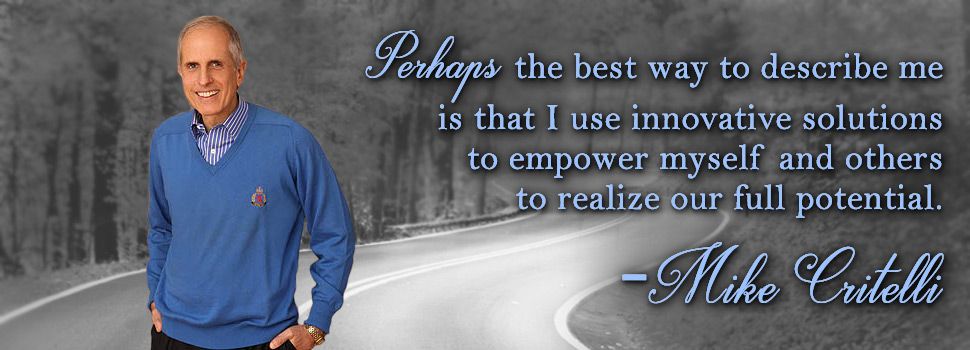
Mike Critelli

Mike Critelli,
Executive
Chairman,
Pitney Bowes

About Mike Critelli

Why I Blog

Recent Posts

Topics

Search

Archives


FINANCIAL CRISIS

October 1st, 2008

Some of my readers have asked me to comment on the financial crisis.  Much has been written about it, and beyond the political rhetoric, there are some very intelligent analyses of what happened and why.  To me, the three obvious root causes were:

  • The disconnected and fragmented sub-prime mortgage creation and investment system, combined with the incentives of all players in the supply chain of these mortgages to grow rapidly and to take on excessive risk;
  • The unintended consequences of an excessive dependence on “mark-to-market” accounting, which caused financial assets to be written down in value to an artificial “market price,” even if the holder had no intention of selling them, and even if the market for that asset really did not exist.  This artificially low asset valuation would not have mattered, except that lending agreements and other financial arrangements depended on maintaining a minimum level of asset values.  The deterioration of asset values due to these artificially low valuations created a death spiral for companies, because the agreements usually required them to shore up declining asset values with additional credit that simply was not available.
  • The mind-boggling complexity of these financial instruments and transactions, which made it extremely difficult for anyone to understand when participants were truly in trouble, until it was too late.   This is also why the rating agencies, on which investors depend to evaluate the riskiness of these instruments and transactions, failed so miserably.

John McCain and others have talked about “corporate greed” as a root cause.  I find that to be an oversimplification of reality.  Greed works when it rewards people for doing things that benefit everyone; it fails to work when it triggers destructive or highly-risky behavior.

In this case, compensation packages caused greed to trigger excessively risky behavior.  The simple reason for this was that, in virtually all these cases, the profit from these instruments and transactions came in immediately and financial services executives were rewarded immediately, but the risk was not evident until much later.  This gravitation toward excessive risk was made even worse by pay packages that had no meaningful upward limit.  Super-sized annual bonuses or stock option grants magnified the misalignment toward excessively risky behavior.

What made matters worse is that these executives could move on to another organization having pocketed the money from these risky behaviors.  Moreover, like stock options, upfront bonuses do not align executives with shareholders and bondholders.  If someone makes $100 million in profits for his or her firm in one year and pockets a $10 million bonus, but loses $500 million the next year either because of the same transaction or different transactions, they get no bonus, but they do not give the $10 million back.  In effect, the fundamental flaw of compensation systems is that they are aligned only on the upside, not the downside.

Similarly, with stock options, someone can take a number of actions to pump up the stock price, exercise options where there have been gains, pocket the gains, and then leave the firm, leaving future shareholders and executives to clean up the mess from the actions that temporarily pumped up the stock price.

As a member of three public company boards of directors, including an independent director membership on two boards, and as a former CEO, I have always been extremely mindful of making sure that executive pay truly aligned executive rewards with shareholder needs.  I particularly focused on insuring that none of the companies I served ever had compensation packages and systems that triggered excessively risky behaviors.  As a CEO, I stayed aligned with shareholders by not selling stock, even though there were many times when I could have sold and made much more profit than I will ultimately make.  I took this approach because I believe that CEOs have to send a message that they believe in their company’s stock, and that insider selling is a very bad message.

Risk is always an element of business decision making, but we should never create environments in which the risky behavior is rewarded to the extent it was here.

PAUL NEWMAN

September 29th, 2008

I do not usually react when a performing arts celebrity passes away, but Paul Newman’s passing was different.  Over time, I came to realize that, in certain ways, he was a role model for me.

He was a person who achieved phenomenal success, but never became arrogant.  When I met him on two different occasions at fund-raising events, the first of which was at his Westport, Connecticut, home, he seemed like a very low-key, normal person well-grounded in reality.  He clearly did not appear to take himself too seriously.

What I most admired about him was his passion to keep expanding his horizons.  Had he just been an actor, he would have had a career that, by itself, would have been among the most distinguished of all performers.  However, he became an award-winning director, producer, and writer, all of which required very different skills from acting. More »

CHANGING GOVERNMENT PRIORITIES

September 29th, 2008

In the September 23 issue of the Financial Times, reporters Chris Bryant, Fiona Harvey, and Tony Barber, in an article entitled “Climate Change Fears After German Opt-Out”, reported that the German government had backed a decision to exempt virtually all of German industry from new EU rules that would force companies to pay for carbon dioxide emissions.  Not surprisingly, the Merkel government justified the decision on the basis that it would cost too many jobs.

Over the last decade, the United States has been soundly criticized by governments, as well as environmentalists, for refusing to endorse the Kyoto Protocol to reduce carbon dioxide emissions.  Global warming has been seen as such an imminent crisis of such horrible consequence that governments have implicitly assumed that addressing it had priority over all other public policy concerns.  Obviously, short-term job losses now trump global warming as a higher public policy priority in Germany.  The reporters state that opponents of the German government decision believe that it will trigger off similar decisions by other governments. More »

EXTRA FEES FOR SERVICES

September 19th, 2008

On Saturday, September 13, I was listening to a commentary by Geoff Colvin of Fortune magazine.  His topic was the increase in the number of items for which U.S. domestic commercial airlines are charging extra fees.  He particularly noted that U.S. Airways is now charging extra for water, except if it is needed for medication.

Having run businesses that had many different kinds of fees, particularly financial services businesses, and having been a consumer for many decades, I have some observations about what makes fees acceptable, and what causes them to be annoyances to consumers. More »

ABILITY OF GOVERNMENTS TO MAKE BAD LONG-TERM DECISIONS

September 17th, 2008

In the September 13 New York Post,  columnist George Will wrote a column entitled “Pension Perils,” which made the same point I have made in several blogs: governments at all levels have made irresponsible commitments for unsustainable retirement benefits for government employees that the governments are unable to honor without severely cutting services or increasing taxes.

But I want to focus on a broader point Will made in his column: More »

TRANSPORTATION FINANCING

September 9th, 2008

More »

HEALTH RELATED LEGISLATION

September 2nd, 2008

Two news items pertaining to health-related legislation caught my attention this summer.  In the July 22 issue of The Wall Street Journal, in an article entitled “Exiling the Happy Meal,” reporter Sarah McBride discussed proposed legislation in Los Angeles that would ban fast-food restaurants like McDonald’s and KFC from opening in a 32-square-mile section of the city.  Not surprisingly, one critic referred to the proposed legislation as an “example of a nanny state.”  Another critic, the president of the California Restaurant Association, blamed the obesity epidemic on “sedentary lifestyles and lack of nutrition education.”

The article also referred to New York City’s law requiring disclosure of calories on the main menus above the counter, and noted that San Francisco also will implement calories disclosure legislation.

A second article, dated July 30, also in The Wall Street Journal, entitled “San Francisco Votes For New Tobacco Rules” reporter Ann Zimmerman describes San Francisco’s proposed law to ban tobacco sales at pharmacies. An article in the Journal the day before, also written by Ann Zimmerman, entitled “Drugstore Tobacco Sales Under Fire”  summarizes arguments from opponents of the legislation that suggest that the legislation will have little impact on smoking rates and will force retailers to deny members of the public something they want. More »

WASTED ASSETS

August 25th, 2008

More »

VOTING MACHINES

August 19th, 2008

In the August 16 New York Times, in an article entitled “Officials Saw Flaws at Polls will Remain in November,” reporter Ian Urbina notes that several of the new voting machine systems, particularly those with the touch screens, will not be ready for deployment before November because of a delay in federal testing and certification processes.

As I read this article, I continue to be mystified as to why elections officials believe that machines will solve voting problems. Our experience with technology is that it is subject to a wide range of potential errors in deployment and use, and that a single testing and certification process never anticipates every possible problem.  Pitney Bowes equipment is highly reliable, particularly with respect to equipment used for postal revenue collection, but part of the reason is that we continually assess how it is being used, and are able to anticipate and react to all of the challenges we see.  We are also fortunate that, although our equipment is critical to our customers’ success, we have the luxury of being able to repair it, and, if necessary, replace it without negatively impacting our customers’ operations. More »

HEALTH CARE PROVIDER SUPPLY

August 12th, 2008

I am continually frustrated when I read about the laser-like focus elected officials and advocates for health care reform have with respect to universal, affordable insurance, but without a comparable focus on addressing supply imbalances with respect to health care professionals.

I was reminded of this in reading an article in the August 7 Wall Street Journal (page D4) relative to the increased waiting time in emergency departments all over the country.  Among the reasons cited in the article entitled “Average ER Waiting Time Jumps to Nearly an Hour” is the difficulty patients have in getting appointments at doctor’s offices. More »


Subscribe to my feed

Google Reader or Homepage
Add to My Yahoo!
Subscribe with Bloglines
Subscribe in NewsGator Online

To receive new posts via email enter your email address.


Disclaimer

This is Mike Critelli's blog. The views and statements expressed herein are those of Mike Critelli and, in the case of a comment, those of the person who submits such comment, and not necessarily those of Pitney Bowes Inc.

The press releases, financial reports, filings with the Securities and Exchange Commission, presentations, interviews, blog posts and other information provided on the Pitney Bowes website may contain "forward-looking statements" as defined in the Private Securities Litigation Reform Act. These statements are based on the currently available information as of the date of such statements and are subject to risks and uncertainties that may cause actual results to differ materially. Pitney Bowes specifically disclaims any obligation to update the information in such press releases, financial reports and or filings, which speak only as of their respective dates, except as required under the federal securities laws. Please see the Forward-Looking Statements Disclaimer in the pb.com TERMS OF USE section of this website.